REVIEW · SAN JUAN
Eco Friendly Farming Tour to Explore Dorado’s Most Beautiful Farm
Book on Viator →Operated by Finca Pastoreo · Bookable on Viator
A real working farm day, not a museum. At Finca Pastoreo, the eco-friendly tour focuses on pasture-raised animals and the everyday work behind regenerative farming. You’ll meet guide José Luis at the farm store and walk through five different animal areas as he explains how the farm operates.
Two big reasons I’d put this on your short list: you get an honest, hands-on style farm education, and you end right where you can buy the food you just learned about. The possible downside is the practical stuff—paths can be muddy and the terrain is slightly uneven, so bring shoes you don’t mind getting dirty and plan for a steady walk.
In This Review
- Key things you’ll want to know first
- Entering Finca Pastoreo: where the tour actually starts
- José Luis and the regenerative farming lesson you can picture
- Stop by stop: what you’ll see at each animal area
- Laying hens and poultry
- Beef/cattle
- Pigs and sheep
- What to wear: mud, sun, and the kind of shoes you’ll thank yourself for
- The farm shop and Wood-Fired food: where the tour ends (and the fun continues)
- Hours to plan around
- What food lovers tend to notice
- The Giant Grass Maze: a 3-mile follow-up you can add
- Is the maze included?
- Timing, group size, and why you should build a buffer
- Price and value: $20 for a real working farm visit
- Who this tour fits best (and who might want a different plan)
- If mobility is a concern
- For very young kids
- Should you book the Eco Friendly Farming Tour at Finca Pastoreo?
- FAQ
- How long is the eco-friendly farming tour?
- What’s the price for the tour?
- Does the tour include admission, or is it extra?
- What animal areas and farming practices are included?
- Is the Giant Grass Maze included with the farming tour?
- How long does the Giant Grass Maze take?
- Where is the meeting point?
- What should I wear to the farm?
- Is the tour offered in English and Spanish?
- What if the weather is bad or I need to cancel?
Key things you’ll want to know first
- Meet José Luis at the farm store, then tour the working farm with stops at multiple animal areas.
- Five animal-based farming practices are featured: laying hens, poultry, beef/cattle, pigs, and sheep.
- Plan for mud and uneven ground—closed shoes and hat/sunscreen are not optional ideas.
- Food is part of the experience: after the tour, the farm shop has eggs, meats, dairy, plus pizza and gelato.
- Optional 3-mile Giant Grass Maze adds around 45 minutes and only includes admission if you book the combo option.
Entering Finca Pastoreo: where the tour actually starts
Finca Pastoreo is in Dorado, Puerto Rico, near Bo. Maguayo on PR-694 (Km 5.5). Your tour starts at the farm store, which matters because the guide meets you there and keeps the flow simple: you begin on-site, move through the farm, and wrap back at the shop.
The tour runs about 1 hour (approx.) and the company notes a maximum group size of 50 travelers. That’s a manageable number for a guided farm walk, but it still means you’ll want to pay attention—this isn’t a slow stroll where you can drift off whenever you feel like it.
Also, you’ll get a mobile ticket, so have it ready when you arrive. It’s the kind of place where showing up prepared with the right footwear saves you stress fast.
If you're still narrowing it down, here are other tours in San Juan we've reviewed.


José Luis and the regenerative farming lesson you can picture
The star of the tour is the guide—José Luis—and the structure is clear. He accompanies you throughout the farm, pauses at each animal area, and explains the farm’s regenerative farming methods and pasture-raised practices.
What I like about this format is that it connects ideas to real animals. You’re not just told concepts from behind a counter. You’re shown the farm setup and then guided through how the practices work in daily life.
On this tour, you’ll encounter five farming practices/animal areas:
- Laying hens
- Poultry
- Beef/cattle
- Pigs
- Sheep
That list is useful because it gives you variety. You’ll leave with a mental map of the farm rather than one single animal story.
One practical note: the experience emphasizes observing animals and farm operations rather than expecting to touch or interact. If you’re coming with that in mind—go in with an eye for watching and learning.
Stop by stop: what you’ll see at each animal area
Laying hens and poultry
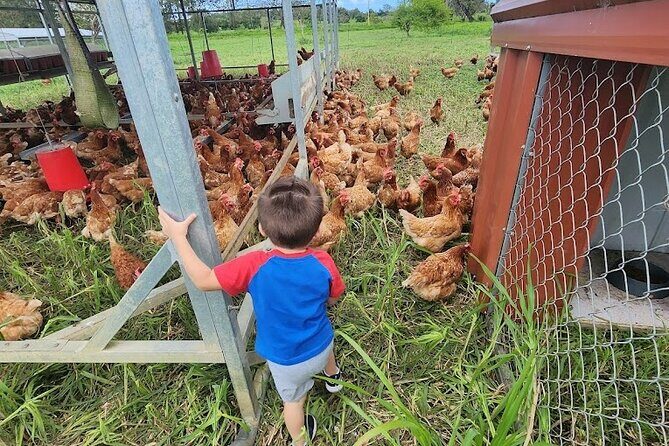
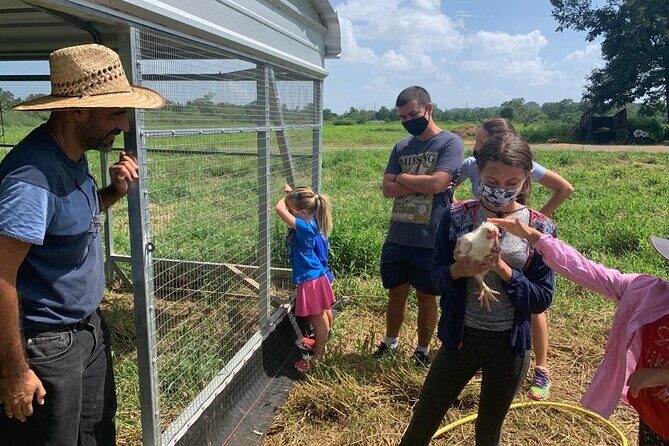
The laying hens area is the kind of stop that clicks quickly. Chickens and eggs are easy for most people to understand, and you’ll see how the farm frames hens as part of a wider pasture-based system.
The tour also includes a poultry stop beyond the hens, so you’re not limited to one type of bird. Expect José Luis to connect these animals to pasture-raised care and the farm’s overall approach. This is also where you’ll likely pick up the most “everyday life” details—how animals fit into the working schedule of the farm.
Beef/cattle
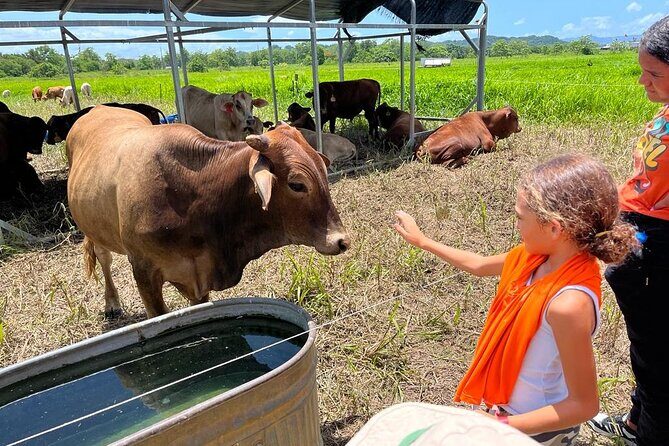
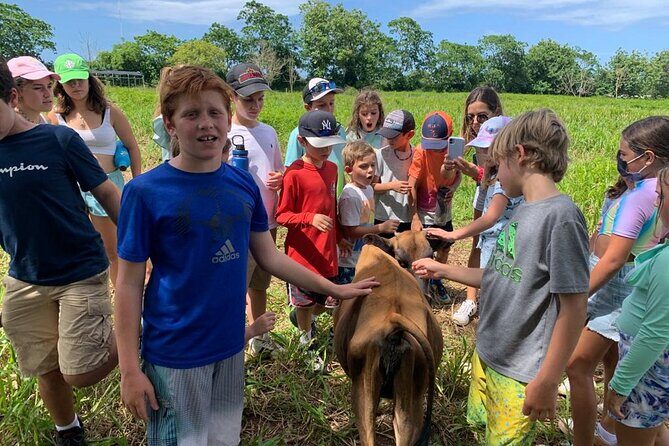
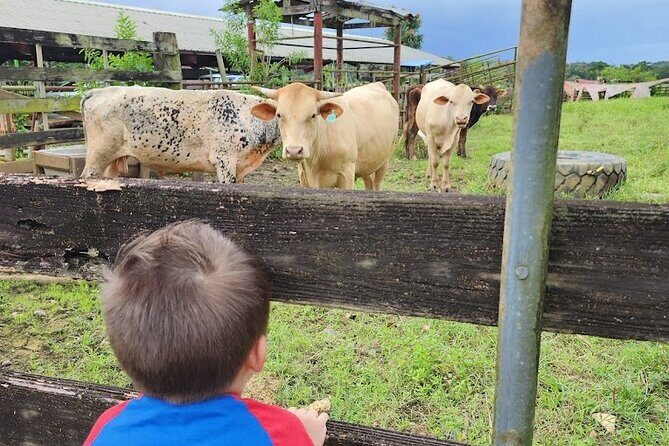
Cattle tend to feel like the slower, bigger-picture segment. Even if you’re not a farm expert, it’s easier to understand the value of pasture raising when you’re seeing animals in a farm setting instead of imagining it.
José Luis’s explanations here are where the tour earns its eco angle. You’ll hear how the farm’s methods are tied to the environment and to the quality of what ends up on your plate.
Pigs and sheep
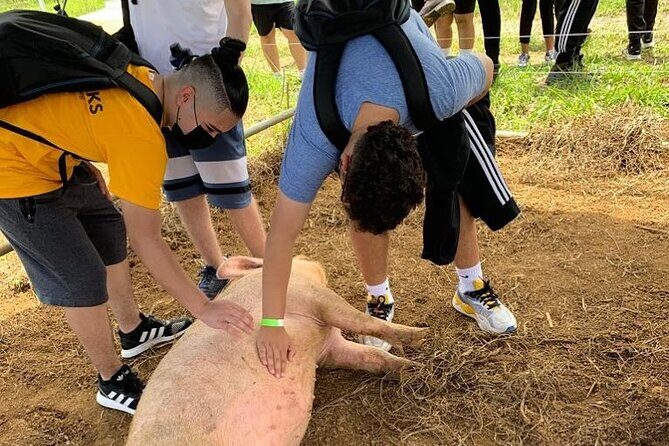
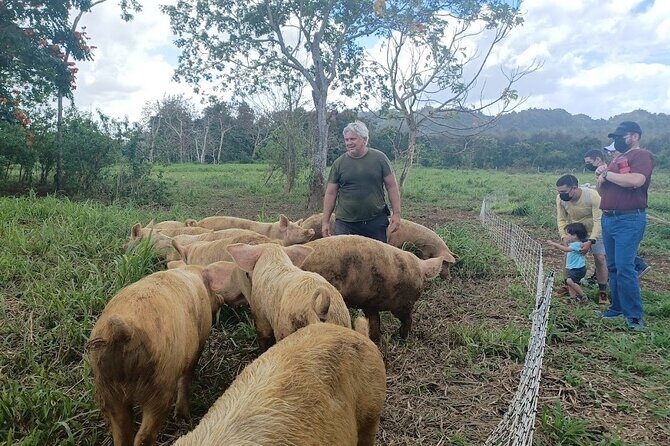
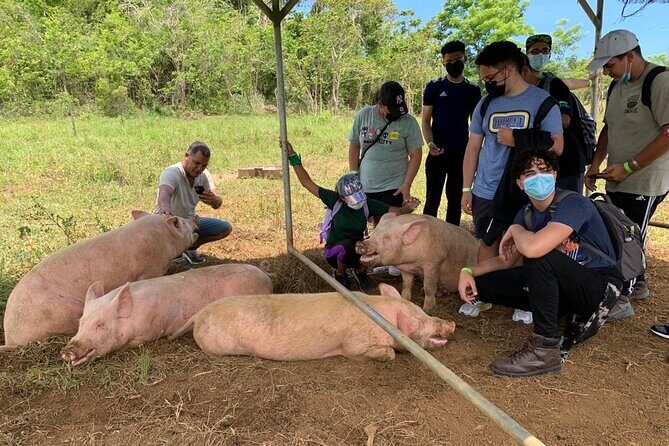
Pigs and sheep add two different textures to the tour. Pigs tend to bring energy and curiosity to a visit—people naturally lean in for this stop. Sheep usually feel more calm and steady, and they can help the tour shift into a slower rhythm.
Together, these stops make the tour feel like a real working operation with multiple teams, rather than a single “display” section.
What to wear: mud, sun, and the kind of shoes you’ll thank yourself for
If you only remember one prep tip, make it this: bring shoes you don’t mind getting dirty. Multiple guests flagged that the walk paths can be muddy, and it’s the exact kind of situation where clean sneakers turn into a regret story.
Here’s what will keep you comfortable:
- Closed shoes (and plan for mud)
- Long pants if you have them
- A hat
- Sunscreen
- Sunglasses can help a lot
- A water bottle nearby
Some people recommend rain boots specifically. Even if you don’t go that far, choose footwear with grip and comfort for uneven ground. This matters because the tour is not built for a long series of stops where you can rest on smooth sidewalks.
And yes—farm tours are hot in Puerto Rico. Shade helps, but you’ll still want to be ready for sun.
The farm shop and Wood-Fired food: where the tour ends (and the fun continues)
After the animal stops, the tour ends back at the farm store. This is one of the best practical parts of the experience because it turns learning into an actual next step.
You can buy nutritious pasture-raised eggs, meats, and dairy products. That means the farm isn’t only selling souvenirs—it’s selling what it produces. If you’re the type who likes to take a place home with you (in the form of food), this is a big win.
You’ll also find house-made options like pizzas, natural juices, and farm-style gelato. Live music and draft beer are part of the broader vibe on certain days too.
Hours to plan around
The shop and food operations run on a schedule, so check your day before you go:
- Farm Store, Artisanal Draft Beer & Gelateria hours
- Tuesday–Thursday: 9:00 am to 4:00 pm
- Friday–Saturday: 9:00 am to 9:00 pm
- Monday & Sunday: Closed
- Wood fire Artisanal Pizzeria hours
- Wednesday–Thursday: 9:00 am to 4:00 pm
- Friday–Saturday: 9:00 am to 9:00 pm
- Monday & Sunday: Closed
- Live Music
- Friday–Saturday: 6:00 pm to 9:00 pm
If you’re timing your day, consider pairing the tour with a long sit-down snack after. One person noted they did the tour around 10 am and then had lunch on-site. That’s a sensible flow.
What food lovers tend to notice
From the experiences shared, food is often a highlight: gelato flavors like ginger, parcha, and Avellana cocoa hazelnut come up. There’s also mention of pizza and even single-origin coffee in the shop.
Even if you’re not a coffee person, this matters because it signals the farm is set up for visitors to stick around, not just pass through.
The Giant Grass Maze: a 3-mile follow-up you can add
There’s an optional way to extend the adventure: the Giant Grass Maze. It covers 3 miles of trails and is set up like an investigation game.
A useful way to plan it: most people spend about 45 minutes at the maze after the farm tour. If you’re booking the combo, you’ll want to count that extra time so you don’t feel rushed.
Is the maze included?
This is the one logistics detail you should lock in before you buy:
- If you choose Farming Tour + Giant Grass Maze, maze admission is included.
- If you choose only the Farming Tour, maze admission is not included.
So read your option carefully. It’s the difference between adding an extra adventure and just watching everyone else disappear into green trails.
Timing, group size, and why you should build a buffer
The stated tour length is about 1 hour. In real life, farm visits can run on farm time, especially if the guide is stopping to explain multiple animal areas.
One practical caution: if you’re traveling with very young kids (or you’re on a nap schedule), add slack. The tour can start later than advertised and may include a longer opening explanation. That doesn’t mean it’s bad—just means timing can be less precise than a city museum entry.
Also remember: maximum group size is 50. That’s not huge, but it’s enough that the guide needs moments to guide attention and keep things moving.
If you want the easiest day, aim for the early part of the day when you have energy and the sun won’t feel as strong.
Price and value: $20 for a real working farm visit
At $20 per person, this tour is priced like an affordable local experience, not an expensive “attraction bus” production. The admission ticket is included in the farming tour, and the experience also has built-in value because you end at a shop where you can purchase pasture-raised products.
What makes the price feel fair is the structure:
- You get a guided farm walk
- You learn about multiple animal areas and practices
- You have food options on-site after the tour
If you add the maze, you’ll be buying more time and more play, which can justify the total cost for families or groups that want something more than animal viewing.
And because this is a working farm, your money supports a project tied to regenerative agriculture rather than paying only for scenic views.
Who this tour fits best (and who might want a different plan)
This is a great match if you want:
- A family day that includes learning and animals
- A food-focused eco experience with pasture-raised products
- An option that feels calm and countryside-like, without needing an all-day commitment
It’s also a solid fit if you enjoy practical education. José Luis’s explanations are built around real farming methods you can picture.
If mobility is a concern
The tour is not recommended for anyone who can’t walk on slightly uneven terrain for an extended period. So if stairs, hills, or unsteady ground are a problem for you, consider another activity.
For very young kids
The tour can work for families, but plan around the pacing. Some families found it wasn’t the best toddler activity because of longer talking at the start and limited ability for tiny kids to reach the most interesting viewpoints. Chickens can be great, but some animal viewing may be farther away depending on where you stand during explanations.
Should you book the Eco Friendly Farming Tour at Finca Pastoreo?
If you want a farm visit that feels practical, grounded, and tied to real food, yes—book it. For $20, you get a guided look at pasture-raised practices across multiple animal areas, plus the chance to eat on-site and buy what the farm produces.
Do it especially if you’ll enjoy the food side and you can handle muddy, sunlit walking. If you’re tempted by the maze, choose the combo option so you don’t end up paying separately for entry.
But if you have trouble with uneven ground, or you need ultra-tight scheduling for naps, go in with a careful plan and consider whether a longer outdoor experience is the best match.
FAQ
How long is the eco-friendly farming tour?
The farming tour runs about 1 hour (approximately).
What’s the price for the tour?
The price is $20.00 per person.
Does the tour include admission, or is it extra?
Admission is included with the farming tour ticket.
What animal areas and farming practices are included?
You’ll encounter five practices/animal areas: laying hens, poultry, beef/cattle, pigs, and sheep.
Is the Giant Grass Maze included with the farming tour?
Maze admission is included only if you book the Farming Tour + Giant Grass Maze option. If you choose only the Farming Tour, maze admission is not included.
How long does the Giant Grass Maze take?
Guests usually spend around 45 minutes at the maze after their tour.
Where is the meeting point?
Meet at Finca Pastoreo, Bo. Maguayo, PR-694 Km 5.5, Dorado, 00646, Puerto Rico. The activity ends back at the meeting point.
What should I wear to the farm?
Bring shoes you don’t mind getting dirty, plus a hat and sunscreen. Long pants and closed shoes are a smart move, and many people suggest rain boots because paths can be muddy.
Is the tour offered in English and Spanish?
Yes. The tour is provided in English and Spanish.
What if the weather is bad or I need to cancel?
You can cancel for free up to 24 hours in advance for a full refund. If the experience is canceled due to poor weather, you’ll be offered a different date or a full refund.