REVIEW · SAN JUAN
Old San Juan Tour in Spanish
Book on Viator →Operated by Daniel Rivera Viruet · Bookable on Viator
Old San Juan lands in Spanish. This 12:30 pm Old San Juan tour is one of the only options that runs in Spanish on Puerto Rico’s capital streets, and it’s built around the story of a walled city shaped by Spain, pirates, and privateers. I like how it starts at Plaza Colón and moves at a human pace through cobblestone lanes and colorful architecture, instead of turning into a quick photo sprint. One thing to watch: you have to buy the right time slot, because the English option is handled differently.
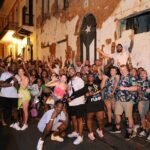
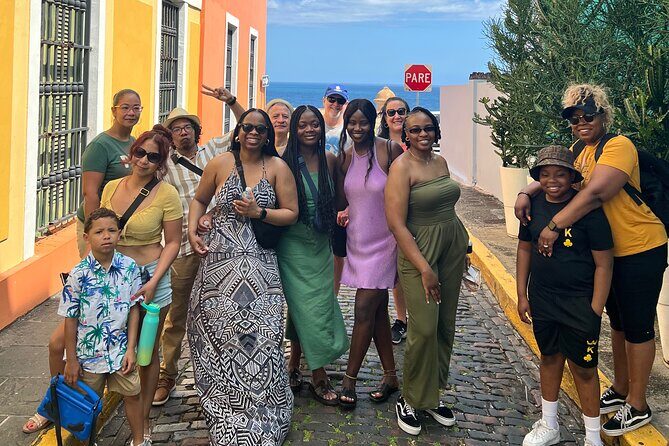
My second favorite part is the guide himself: Daniel Rivera Viruet (often called Dani) brings a calm, upbeat energy and keeps checking in so the group stays together. I also like that the tour limits the group to 20 travelers, so questions are actually welcomed and it feels more like walking with a smart friend than being herded. The only drawback is that the biggest sites are mainly viewed from the outside, so if you’re hoping for inside-the-fort time, you’ll need a separate plan.
If you want Old San Juan explained in Spanish, with strong local context and practical stops that help you orient fast, this is a great way to start your visit.
In This Review
- Key Things to Know Before You Go
- Spanish-Only Old San Juan: The Value of Getting It Right
- Meeting at Plaza Colón and Getting Oriented Fast
- Parroquia San Francisco de Asís: History With a Respectful Footstep
- Castillo de San Cristóbal: The Big Fort You See From the Right Angle
- Calle San Sebastián and the Festival Connection
- La Puerta de la Bandera: Flag History and a Practical Photo Stop
- Iglesia de San Jose: Another Church Stop, Another Respectful Entry Rule
- The Old Cemetery by the Beach: A Quiet Pause Near the Coast
- Cuartel de Ballaja: Spanish Soldiers and a Possible Bathroom Break
- Castillo San Felipe del Morro: El Morro’s Story Without Paying Twice
- Plaza del Quinto Centenario and the Telluric Totem
- The Door of San Juan Bautista: A Gate With Big-City Meaning
- La Rogativa and San Juan Bay Views
- Juan Ponce de León’s House (From the Outside) and the 1521 Story
- The Oldest Church in Puerto Rico (1521): A Landmark You’ll Recognize
- Calle de la Fortaleza: Where the Walking Tour Drops You Into Real Life
- Capilla del Santo Cristo de la Salud: Tour End, Lunch Start
- Who This Old San Juan Spanish Tour Is Best For
- The Bottom Line: Book or Keep Looking?
- FAQ
- Is this Old San Juan tour offered in Spanish?
- What time does the Spanish tour start?
- Where is the meeting point?
- How long is the tour?
- Does the tour include entry into the castles?
- Do you enter the churches?
- Is there a restroom stop?
- What is the group size?
Key Things to Know Before You Go
- Spanish-only at 12:30 pm means you’ll practice your ear from the first block onward. English availability is handled separately.
- Small group (max 20) makes it easier to ask questions and keep a comfortable walking rhythm.
- You won’t enter the major castles (San Cristóbal and El Morro), though you can pay to visit them afterward.
- Church stops are respectful: entry happens only if the space is empty or there aren’t many people praying.
- You’ll get photo points like La Puerta de la Bandera, plus views along San Juan Bay at La Rogativa.
- A bathroom stop may be available around Cuartel de Ballaja, depending on what’s open that day.
Spanish-Only Old San Juan: The Value of Getting It Right
Old San Juan can feel like you’re walking through postcards. This tour does something better: it explains how those postcards came to be, in Spanish. That matters. The city’s details—the church dates, the defensive design, the gate names—land more clearly when the guide is speaking your target language, not switching mid-sentence.
The schedule also matters. The Spanish tour is at 12:30 pm. If you accidentally buy the English option, you’ll be waiting for a different language experience. If English is what you need, availability is not guaranteed unless you ask ahead.
Price is also reasonable for what you get. At $30 per person for about two hours, you’re paying for a guided walking route with named stops, context at each location, and a compact group size. You’re not paying for entrance tickets for everything, because the big castle interiors are left for later.
Other Old San Juan walking tours in San Juan
Meeting at Plaza Colón and Getting Oriented Fast
You meet at 407 C. de San Francisco, San Juan, 00901, Puerto Rico. The start point is Plaza Colón, and the first moments are a quick orientation: why Spain built a walled city in the 1500s, and how defenses shaped everyday life. If you like cities with strong structure—streets that make sense because they were planned—this is a helpful beginning.
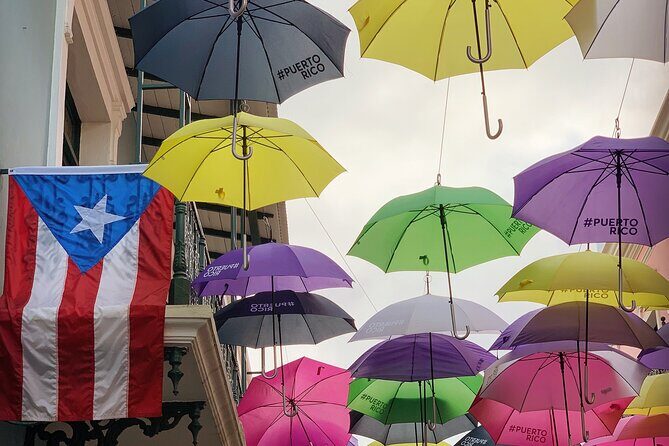
Then you’re off onto cobblestone streets and through the colorful Old San Juan buildings that define the neighborhood. This matters because the tour doesn’t waste time teaching you basic geography while everyone is still figuring out where they are. You learn the “why” early, while the city is still unfolding in front of you.
Parroquia San Francisco de Asís: History With a Respectful Footstep
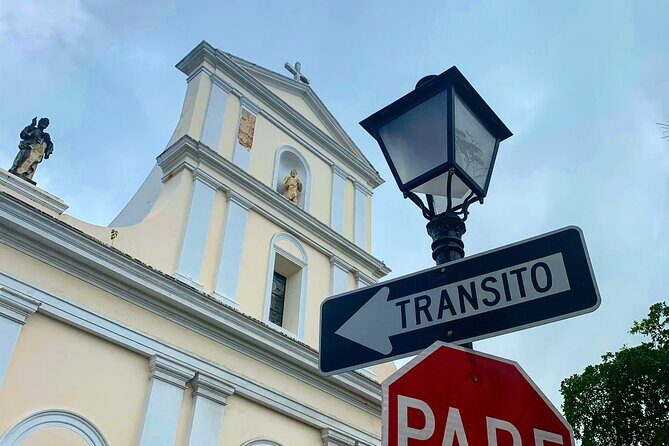
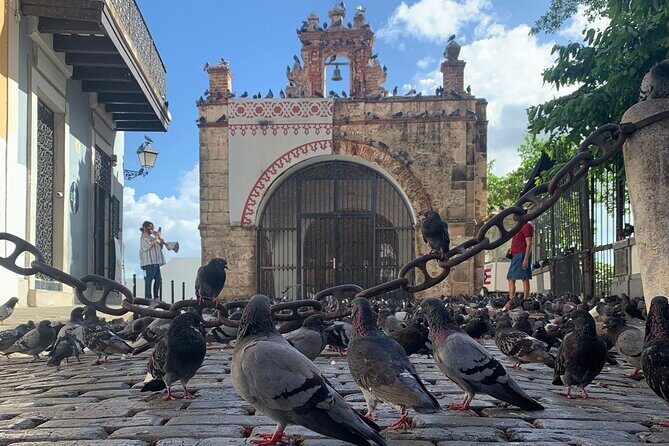
The first church stop is Parroquia San Francisco de Asís, founded in 1756. You get the kind of details that help churches stop feeling like generic sightseeing: why it matters, how it fits into the city’s timeline, and what to look for when you notice architecture up close.
The tour’s approach to church entry is simple and respectful: they only go inside if it’s empty or there are very few people, and you’re not expected to interrupt prayer. That means you might spend the full time outside in some cases, but you’ll still get the story and the key landmarks.
Castillo de San Cristóbal: The Big Fort You See From the Right Angle
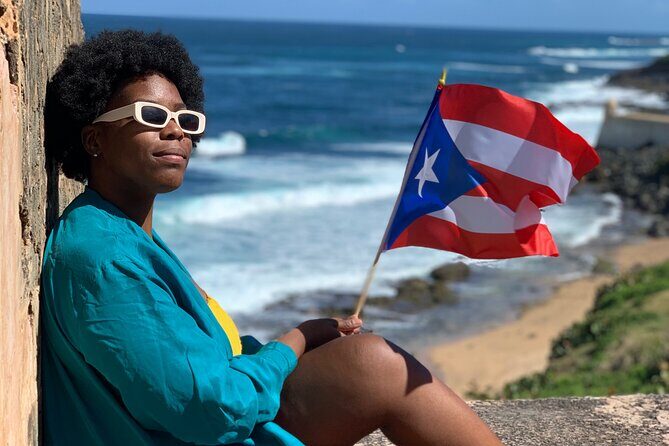
Next is Castillo de San Cristóbal, described as the largest castle built in America to defend the city. Even though you don’t enter, you still benefit from a guided explanation of how it functioned as part of the defense system. A fort can be impressive, but directionless. The tour gives you that direction.
They do not enter the castle, and the tour also signals that if you want the inside experience, you’ll need to buy tickets separately after the walk. For many visitors, that’s the best tradeoff: you see the fort’s purpose clearly during the tour and then decide later if you want to spend time and money going deeper.
Calle San Sebastián and the Festival Connection
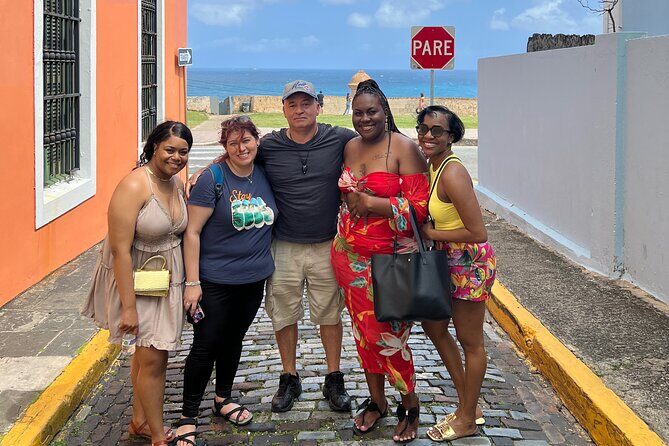
Calle San Sebastián is where you slow down for the street itself—cobblestones, colorful facades, and the kind of urban texture that makes Old San Juan feel lived-in. This street is also tied to the largest festival in Puerto Rico in January. Even if you’re visiting outside festival season, it’s worth knowing because it changes how you interpret the street’s energy.
This stop is short, about ten minutes, so treat it as a “what to notice” moment rather than a long wander. If you love street-level details, you’ll be glad the route includes this instead of only forts and plazas.



La Puerta de la Bandera: Flag History and a Practical Photo Stop

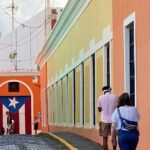
La Puerta de la Bandera is one of those Old San Juan spots that works both for story and for pictures. The guide explains the flag of Puerto Rico and how it has changed over time, then you get a natural photo moment right at the gate.
If you care about symbolism, this stop pays off. Gates aren’t only structures; they’re reminders of authority and identity. And if you’re traveling with someone who likes photos, this is a place where you’ll all feel satisfied without needing extra time.
Iglesia de San Jose: Another Church Stop, Another Respectful Entry Rule
The tour continues to Iglesia de San José, tied to 1532 and noted as the second oldest church in Puerto Rico. Again, the guide shares history and highlights what makes it matter.
Entry follows the same rule as earlier churches: they’ll only go in if it’s empty or there are few people, and you can’t interrupt prayers. That policy keeps things smooth inside worship spaces and avoids the awkward feeling of barging into a ceremony.
The Old Cemetery by the Beach: A Quiet Pause Near the Coast
Between the major landmarks, the route includes an old cemetery located near the beach and close to Castillo del Morro. This is the kind of stop that adds depth to the city beyond architecture and defense.
It’s not framed as a horror-story stop; it’s presented through history. If your ideal tour includes a few calmer, less showy moments, this one is a good fit. Just keep in mind it’s not described with a long time allotment, so you’ll want to keep your eyes open and stay with the group.
Cuartel de Ballaja: Spanish Soldiers and a Possible Bathroom Break
At Cuartel de Ballaja, you learn about the place where Spanish soldiers lived. You’re connecting the city’s fortifications to the people who had to actually occupy them. That makes the surrounding defensive sites feel more real.
This is also listed as the bathroom stop if available. In Old San Juan, access can vary by day and by what’s open, so I’d treat this as helpful, not guaranteed. If you’re someone who waits until you feel urgent, this is where you want to take the chance if it’s offered.
Castillo San Felipe del Morro: El Morro’s Story Without Paying Twice
Then comes Castillo San Felipe del Morro, built in 1539 to defend the bay entrance. Like San Cristóbal, you don’t enter. But you do get the story of why it was placed where it was and what it protected.
If you’ve seen photos of El Morro, you probably already know it’s dramatic. The tour’s value is that it ties the drama to function, so your brain understands the “why” while your eyes handle the “wow.”
After the tour, you can visit the castle with an entrance fee. I like this approach because you’re not stuck committing your whole afternoon before you’ve even mapped the route.
Plaza del Quinto Centenario and the Telluric Totem
At Plaza del Quinto Centenario, the tour shifts into the modern layer of Old San Juan. The plaza was built in 1992 to celebrate 500 years of the discovery of America. It’s a reminder that this city’s timeline isn’t only the colonial era—it keeps getting interpreted through later anniversaries and art.
The guide points out the Telluric Totem made by artist Jaime Suárez. That’s a nice touch. It gives you something contemporary to look for, not just buildings that stayed the same.
This stop is short, about ten minutes, so it works best if you’re ready to pause, look, and keep moving.
The Door of San Juan Bautista: A Gate With Big-City Meaning
The tour includes the door of San Juan Bautista, one of the main gates of the walled city. It’s a compact stop, but it matters because gates are where the city controlled movement and identity.
The guide shares interesting points about its role in the city’s structure. Even if you’re not an architecture person, a gate like this tends to click in your mind once someone explains how it functioned as part of defense and access.
La Rogativa and San Juan Bay Views
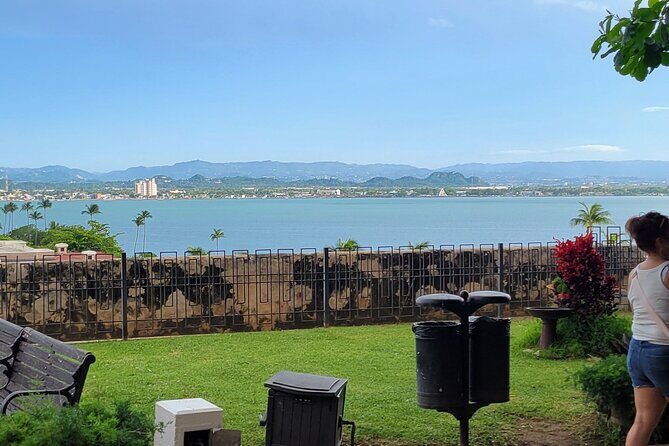
Next is La Rogativa, where you get a walking view of San Juan Bay. You’ll also see part of Juan Ponce de León’s house from here. That’s a smart way to connect the battlefield geography to the people who benefited from it.
If you like photo moments that feel like real geography instead of random angles, this is one. It also helps reset your energy. After forts and gates, bay views are a good reward.
Juan Ponce de León’s House (From the Outside) and the 1521 Story
The route continues with the House of Juan Ponce de León from 1521, presented as a history stop. The tour notes you don’t enter, but the guide explains what you should notice and why it’s part of the story of Spanish settlement and power.
If you’re the type who likes to understand why a place matters even if you can’t go inside, you’ll feel satisfied here. If you need interior time, plan to add it later with the proper entrance options.
The Oldest Church in Puerto Rico (1521): A Landmark You’ll Recognize
Another church stop is listed as the oldest church in Puerto Rico (1521). You learn its history and details, and once again, entry only happens if it’s empty or there are few people praying.
This kind of stop helps you understand Old San Juan as a “city of institutions,” not only a city of walls. Churches, gates, and military sites all reinforce the same theme: control and community shaped by Spanish rule.
Calle de la Fortaleza: Where the Walking Tour Drops You Into Real Life
Then you hit Calle de la Fortaleza, described as the main street of Old San Juan. This is the practical section: shops, restaurants, craft sellers, and galleries. After a historical route, it’s a relief to transition into the neighborhood where you can actually spend money and time.
A short stop here works because you can connect the storytelling to where you’re standing. You’ll know what street you’re on and why it matters within the walled city layout.
Capilla del Santo Cristo de la Salud: Tour End, Lunch Start
The tour finishes at Capilla del Santo Cristo de la Salud and then you’re set to keep walking along Fortaleza Street for lunch or shopping. If you’re hungry, this is a good landing point because it doesn’t force you into a long “now what” period afterward.
The end also means you can decide how much energy you have for castles with entrances versus more street wandering. Two hours gives you enough structure to feel oriented without wiping you out.
Who This Old San Juan Spanish Tour Is Best For
This is a strong pick if you:
- Want Spanish-only interpretation (and you’re ready to listen and learn at street level).
- Like history explained in a guided walk rather than a museum format.
- Prefer a small group setting with time for questions.
- Are happy to see major castles from outside and choose inside visits later.
It’s less ideal if you:
- Only want English and don’t want to coordinate availability in advance.
- Are expecting long interior time at the major fortresses.
- Need frequent, guaranteed restroom access (the tour notes a bathroom stop if available).
The Bottom Line: Book or Keep Looking?
I’d book this tour if Spanish is your goal or even just your preferred language setting. At $30 for about two hours, the value is in the focused route, the small group size, and the fact that Daniel Rivera Viruet keeps the experience organized without rushing the city.
Skip it if you’re shopping for a fully ticketed fortress-and-church inside day. This walk is built for orientation and context, not for stacking multiple paid admissions during the same two-hour window.
FAQ
Is this Old San Juan tour offered in Spanish?
Yes. This specific tour is Old San Juan in Spanish. English is handled on a different option, and you may need to message in advance to check availability.
What time does the Spanish tour start?
The Spanish tour start time is 12:30 pm.
Where is the meeting point?
The tour meets at 407 C. de San Francisco, San Juan, 00901, Puerto Rico.
How long is the tour?
The tour lasts about 2 hours (approx.).
Does the tour include entry into the castles?
No. The tour notes that they do not enter Castillo de San Cristóbal or Castillo San Felipe del Morro. You can visit those castles afterward with an entrance fee.
Do you enter the churches?
They enter only if the church is empty or has few people. They also avoid interrupting people who are praying.
Is there a restroom stop?
A bathroom stop is listed as Cuartel de Ballaja if available. It’s not guaranteed, so it helps to use it when offered.
What is the group size?
The tour has a maximum of 20 travelers.