REVIEW · SAN JUAN
San Juan Self-Guided Walking Audio Tour
Book on Viator →Operated by History with Action · Bookable on Viator
San Juan has a story in every corner. This self-guided audio walk lets GPS-triggered narration carry you from pastel streets to huge Spanish forts, and I love the flexibility to pause for photos or detours without a group schedule. One thing to keep in mind: the audio can occasionally lag or fail to auto-start at a stop, so you may need a quick restart if it gets weird.
You’ll download Action’s Tour Guide App after booking (with a password sent by email/text), then follow the route from the starting point on your phone. A small practical note I’d plan around is that this is not an entrance ticket, so you’ll want to check opening hours and decide how much time to add for places like El Morro and Castillo San Cristobal.
If you want a low-pressure way to learn while you walk, this is an efficient, good-value choice for Old San Juan. Just bring earbuds, charge your phone, and treat it like a walking route you manage, not a guaranteed front-row show.
In This Review
- Key highlights you’ll actually feel on the walk
- Price and time: good value if you like moving at your own pace
- Getting set up: download on strong signal, then trust the route
- Stop 1 at La Corazon Steps: start with a bright, easy-to-find landmark
- Pastel facades and theater history: Teatro Alejandro Tapia y Rivera
- El Antiguo Casino: Beaux Arts details you’ll want to notice up close
- Plaza Colón: why Columbus matters in a city that fought back
- Castillo San Cristobal and the fortification mindset: the big defensive opening act
- Polvorín de Santa Elena (1783): the hidden structure angle
- El Morro (Castillo San Felipe del Morro): the epic fort you’ll want to linger in
- Batería Santa Elena and Cuartel de Ballaja: when the walk feels like a military map
- Casa Blanca (1521) and the Catedral Basilica Menor: power shifts from war to worship
- Puerta de San Juan and La Fortaleza: the old gate and the original fortress
- Wrapping up at Paseo de la Princesa: end near food and a real recovery moment
- How to make the tech work smoothly (and avoid the annoying audio moments)
- What kind of traveler should book this audio tour?
- Should you book the San Juan Self-Guided Walking Audio Tour?
Key highlights you’ll actually feel on the walk
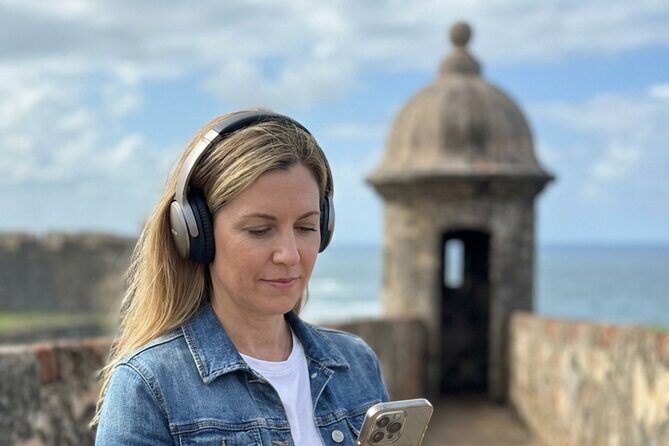
- GPS-activated stories: narration plays as you move, so you’re not stuck reading plaques.
- Real freedom: start when you want, pause when you want, and skip what you don’t care about.
- Fortifications first, then the old-city core: you get the big defensive sights without backtracking chaos.
- Offline after download: once you download on WiFi/cellular, the route works without signal.
- One-year value: buy once and reuse for the next 12 months, including on return trips.
Price and time: good value if you like moving at your own pace
At $16.99 per person for a 1 to 2 hour walk, this is priced like a “smart add-on” to your day rather than a premium escorted tour. The value comes from two things: you get a full walking route with multiple story stops, and you also keep the purchase working for one year. If you’re doing a cruise day, splitting your time with the beach, or returning later, that reuse can make the cost feel tiny.
The time range is realistic, but only if you treat it like a guided walk rather than a site-hopping checklist. If you plan to go inside major fortifications (and you should, if you can), add extra time. Heat and shade matter here too. I’d build in breaks even if the audio keeps moving.
Other walking tours we've reviewed in San Juan

Getting set up: download on strong signal, then trust the route

This is an app-based self-guided experience. After booking, you’ll get an email and text with instructions and a password. You must download the tour while you have strong WiFi or mobile data, then it works offline after that. If you try to download later on weak signal, your “easy day” can turn into an app-staring day.
When you’re ready to start, you open Action’s Tour Guide App, pick the tour version that matches your starting point/direction if needed, and begin at the designated start. No guide meets you. You simply arrive at the first story point, and the audio is designed to start automatically based on where you are.
Practical tip from what’s worked for people: keep your phone focused on the tour. If you bounce between apps (especially camera multitasking), audio triggers can lag or cut off. And if the narration doesn’t start when you reach a numbered spot, don’t panic—restart the app and get back to the planned path.
Stop 1 at La Corazon Steps: start with a bright, easy-to-find landmark

Your walk begins at Triunfo de San Sebastian by ROBI, at the La Corazon Steps. The big draw is immediate: it’s hard to miss the steps with a painted red heart. Starting at something visually obvious matters, because you’re not meeting anyone—you’re starting the tour on your own.
This first section is a gentle warm-up. It helps you get oriented to the rhythm of the tour: follow along, let stories play as you reach points, and don’t overthink it. If you’ve never done GPS-style audio walks, this is a good place to learn how it feels.
If you’re a planner, you might glance at the map before you set off. If you’re more “walk first, decide later,” you can just start here and let the route do the steering.
Pastel facades and theater history: Teatro Alejandro Tapia y Rivera
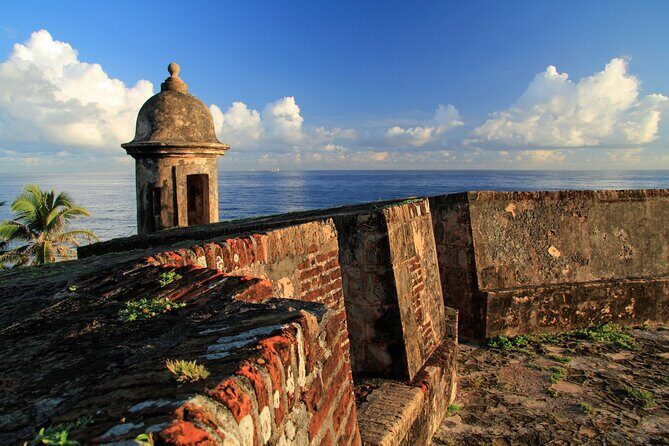
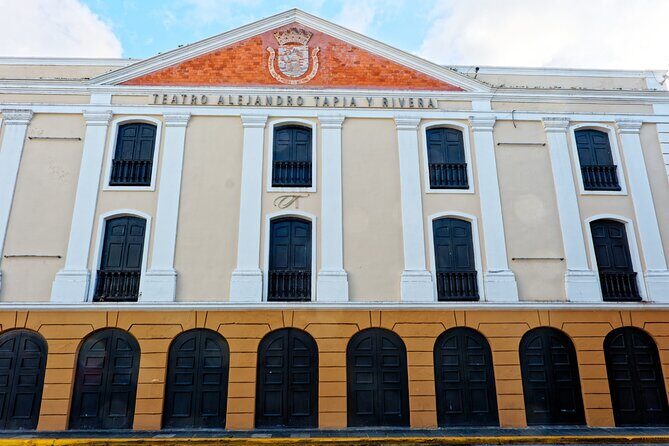
After you round the bend, the route takes you past bright pastel buildings toward Teatro Alejandro Tapia y Rivera. This is the kind of stop that makes you slow down, even if you don’t love theaters, because the surrounding streets look like a postcard.
The narration here is also a quick “how to listen” moment. You’ll get reminders that the audio plays automatically as you follow the route, so it’s less about reading and more about watching your surroundings while the story runs in the background.
What I like about this mid-early stop: it breaks up the heavy-fortress theme that comes later. You’re seeing how Old San Juan’s cultural life sits right beside the defensive story.
El Antiguo Casino: Beaux Arts details you’ll want to notice up close
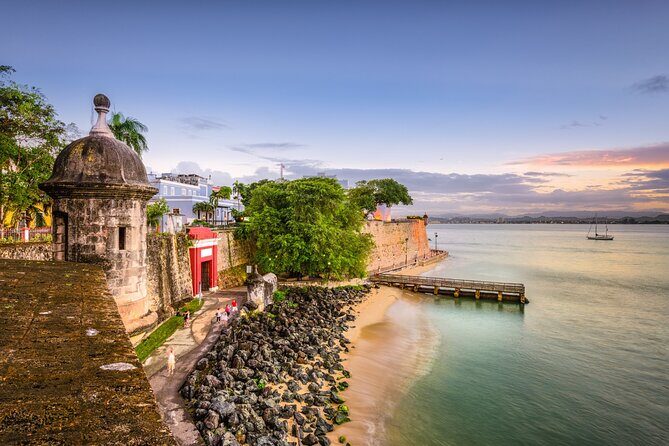
Next comes Antiguo Casino de Puerto Rico at an intersection where you can spot the pastel building ahead and to the right. This one’s about architecture details, and the narration points out a Beaux Arts-style façade with Greek columns and Roman balustrades.
This is a good spot to stand still for a minute. Those details are exactly the kind your eyes catch better when you’re not hustling. If you’re sweating, shade-hunt while you listen here and let the audio do the explaining.
The possible drawback: if you’re in a hurry, this can feel like a quick look. For maximum value, take 2 to 3 photos max, not 20, and then move on.
Other guided tours in San Juan





Plaza Colón: why Columbus matters in a city that fought back
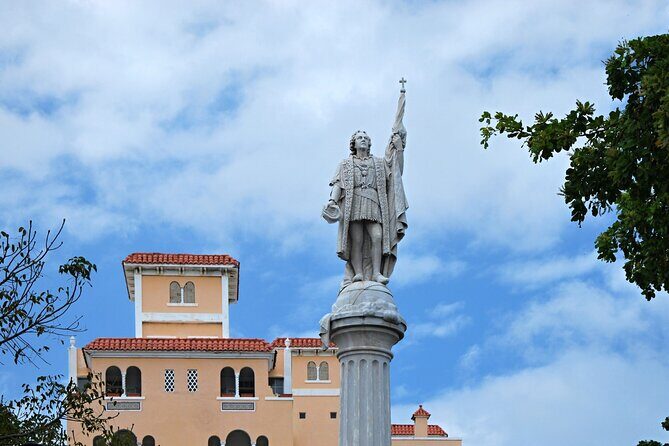
At Plaza Colón (also called Columbus Square), you’re greeted by a towering Christopher Columbus statue. This stop ties directly into the Spanish colonial story, and the narration explains the logic of why Columbus is memorialized here.
This is also one of those “city psychology” places. You get to see how symbols, power, and religion all sit in public space, then you keep walking toward the military walls that defended that same system.
If you’re the type who likes context, pause long enough to look around the square, not just at the statue. The surrounding streets and buildings help you understand how people moved through the old city.
Castillo San Cristobal and the fortification mindset: the big defensive opening act
Soon you’ll see the huge fortress ahead: Castillo San Cristobal, described as the largest Spanish-built fortification in the Americas. The route tells you to use crosswalks and head toward the Castillo’s main entrance visitor center.
Two key things to know here. First, the tour is a story walk, not a guaranteed entry ticket. Second, how long you spend at Castillo San Cristobal changes the feel of your whole day. If you only look from outside, you’ll miss a lot. If you go inside, you’re turning this into a longer visit and should plan for it.
Why this stop is worth it: it sets the theme for everything after. You’re not just sightseeing. You’re learning how San Juan’s rulers tried to control conflict—with stone walls, artillery positions, and layered defenses.
Polvorín de Santa Elena (1783): the hidden structure angle
Continuing along, you’re told to look left for a tan stone building with a triangular roof—the Polvorín de Santa Elena (1783)—hidden behind a clump of trees and visually framed by two tall towers.
This is the kind of stop I like in audio tours. It rewards attention. Even if you’re not deeply into military architecture, you’ll feel the surprise of spotting something you’d otherwise miss.
The practical consideration: greenery and tall viewpoints can make the building harder to spot if you’re rushing. Slow down slightly here, and let the narration guide your visual search.
El Morro (Castillo San Felipe del Morro): the epic fort you’ll want to linger in
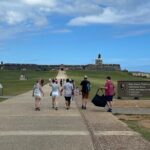
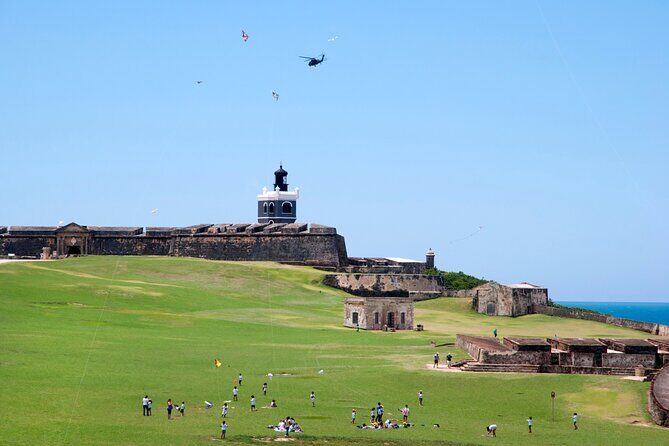
Directly ahead you’ll reach Castillo San Felipe del Morro, usually called El Morro. The audio sets it up as one of the most epic fortifications in Puerto Rico and much of the Americas, with construction beginning in the 1500s.
As with Castillo San Cristobal, admission isn’t included in the tour purchase. So you’re making a choice: quick exterior look and onward, or take the time to go in. If you want the full experience, budget extra time at El Morro. The inside spaces and views are the payoff.
What makes El Morro so compelling while you listen: your brain connects the dots from the earlier story about power and conflict. Suddenly the walls don’t feel like background—they feel like the main character.
Batería Santa Elena and Cuartel de Ballaja: when the walk feels like a military map
As you keep walking, the tour takes you to Batería Santa Elena, described as a gray-and-white structure with a black top that looks almost like a lighthouse above the stone wall. Then it moves on to Cuartel de Ballaja, a large yellow barracks building with three flags flying above the roofline.
These stops help you understand San Juan’s defense as a system, not one single fortress. You’re seeing how artillery, positions, and barracks fit into the same overall environment.
If you’re heat-sensitive, this is where pacing matters. You may be in full sun between viewpoints. Use the audio to decide when to stop for water and when to keep moving.
Casa Blanca (1521) and the Catedral Basilica Menor: power shifts from war to worship
At the next pause point, the route highlights Casa Blanca, noted as the very first fortification in San Juan, built in 1521 and originally meant to protect settlers against revolts by the indigenous Taino.
Then you’ll find the Catedral Basilica Menor de San Juan Bautista, described as the oldest church in the Americas, built in 1540 and surviving attacks on San Juan.
This is a powerful pairing on the walk. You go from defense walls to a church that lasted through violent centuries. Even if you’re not religious, the building’s endurance tells you something about how colonization and community were tied together.
The drawback to plan around: church exteriors and areas around them can have crowds or traffic flow changes. Keep an eye on footpaths and don’t assume you can stop anywhere. Follow the route line so you don’t end up detouring away from where the audio expects you to be.
Puerta de San Juan and La Fortaleza: the old gate and the original fortress
Next is Puerta de San Juan, described as the only remaining gate of the old city. The walk comes down a shady, colorful cobblestone street, then opens onto that massive stone doorway.
After that, the tour points out La Fortaleza, Spain’s original fortress here in San Juan, tracing back to before the 1530s. While you listen, you look up at the city walls and spot buildings behind them.
These two stops are great for people who like “urban bones.” You’re not just visiting monuments—you’re seeing how the city’s boundaries shaped movement, safety, and daily life.
Wrapping up at Paseo de la Princesa: end near food and a real recovery moment
Your tour concludes at 101–103 Paseo de la Princesa, next to Pinchos and Al carbón cocina. This matters more than it sounds: it gives you an easy landing zone for a snack, a meal, and people-watch time while your feet cool down.
If you’ve been inside El Morro and Castillo San Cristobal, you may feel like you’re still in “tour mode.” That’s normal. I’d plan an unhurried stop afterward rather than sprinting to the next item on your list.
How to make the tech work smoothly (and avoid the annoying audio moments)
Most people seem to like how the audio follows along as you walk, including the experience of automatic story starts when GPS triggers line up. Still, there are a few issues to watch for based on real feedback patterns.
Here’s what helps:
- Download while you have strong WiFi/cellular so the offline experience is actually ready.
- Use earbuds for clear voice audio while you walk.
- Follow the route path instead of cutting across streets or wandering far off. GPS-based triggers need you near the expected line.
- Keep other apps closed if you can, especially camera multitasking that can interrupt triggers.
- If narration doesn’t start at a stop, restart the app and then get back on the route line.
None of this is hard, but it’s the difference between a smooth walk and a frustrating one.
What kind of traveler should book this audio tour?
I think this works best if you:
- Have limited time in Old San Juan and want to cover a lot without waiting for a group.
- Like learning in motion, using narration while you look around.
- Want the freedom to pause for photos, snacks, and side streets without asking permission.
- Prefer a plan you can reuse, since the ticket works for one year.
I’d think twice if you:
- Hate app-based experiences or rely on perfect auto-start audio.
- Want guaranteed entry to major fortifications as part of the price.
- Need lots of breaks from walking and may feel stressed by a tightly defined route.
Should you book the San Juan Self-Guided Walking Audio Tour?
If you want an efficient, flexible way to learn San Juan’s story while you walk the walls, I’d book it. The GPS-activated narration, the freedom to move at your pace, and the value at $16.99 add up fast—especially if you’re doing this as a cruise-day plan or you want to return later and relisten.
Just go in with two smart expectations: it’s not an entry ticket for El Morro, and the audio can be finicky if you stray far from the route or if your phone is multitasking. Handle those, and you’ll get a great self-guided run through the city’s most important architecture and fortification story beats.
If you’re ready for a walk that feels like you’re being guided by your phone, this is an easy yes.